


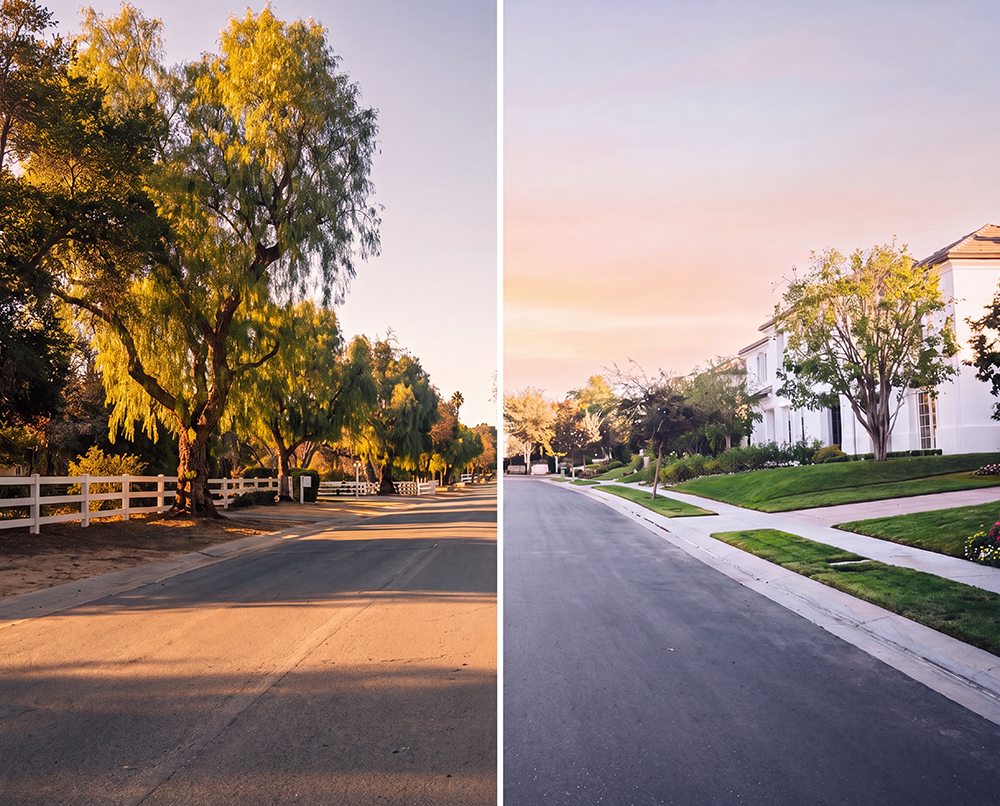
We get this question all the time, and it makes sense. Hidden Hills and Calabasas sit next to each other along the 101, sharing a school district, a sheriff’s station, and many of the same buyers. Both are gated and private, and at certain price points the homes can look similar on paper.
But the lives are not similar — not even close. We work both markets every day, and most people know within ten seconds of driving through each gate which one feels right. This guide is everything we walk buyers through before that moment.
How Should You Start Choosing Between Hidden Hills and Calabasas?
When a buyer comes to us undecided, the first question is not really about where they want to live — it is about how. So we ask a fun one: what does your ideal Saturday morning look like? People laugh a little — then they answer, and the answer is very revealing.
Quiet coffee outside, kids on bikes, a rustic outdoor vibe — and especially if horses have come up — Hidden Hills is probably calling. Walking to breakfast, a morning at The Commons, tennis, walking the kids to a community center with a pool — that sounds more like Calabasas: The Oaks, Parkway Calabasas, Mountain View Estates, depending on budget.
IMPROTA INSIGHT “Tell me about your Saturday morning, and we might be able to tell you where to live.” — Jason Improta
Beyond that, three things really settle it:
- Land or house? In Hidden Hills you are most likely buying the property first — every lot is a minimum of one acre, with room for a barn, guest house, or sports court. In Calabasas you are buying the house and location; the backyard is likely beautiful, but you are not building a compound.
- Price. Nobody wants to hear this, but Hidden Hills has a very real entry point and Calabasas does not. At $4 million, Calabasas gives you a fantastic house; Hidden Hills probably gives you a teardown — maybe. North of $5 million, there is a real conversation to be had.
- Privacy versus convenience. Hidden Hills is a gated city of its own — no stores, no through traffic, bridle trails instead of sidewalks. In Calabasas you are five minutes from everything; the gate is the neighborhood, but it is not the city.
And schools? It is all Las Virgenes Unified — basically a wash. More below.
What Does Living in Each Actually Feel Like?
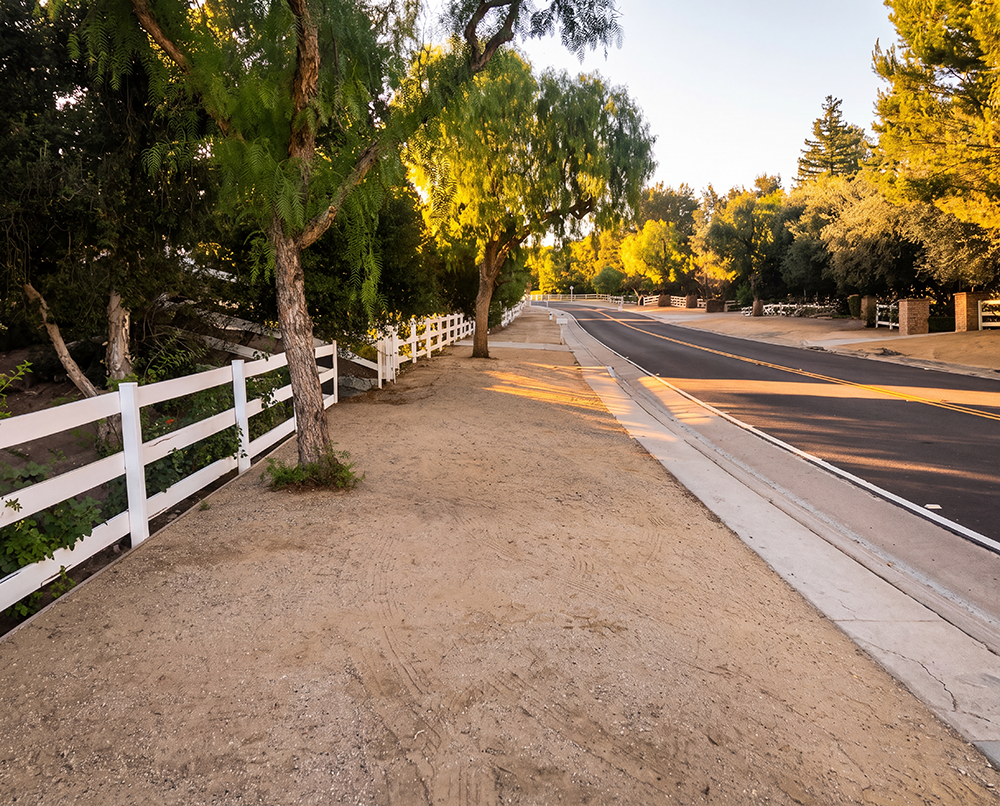

The houses might look similar on paper; the days do not — and that is what a listing will never tell you.
In Hidden Hills, you come home through the gate and enter another world. It almost just turns off — no street lights, no sidewalks, no stores, no reason for anyone to be on your street unless they live on it. It is quiet in a way that takes weeks to get used to. You hear horses. You see deer, coyotes, the occasional bobcat. You may even get a neighbor’s text about a loose horse — part of the experience.
That said, everything is a little bit more of a drive — coffee, groceries, dry cleaning all mean leaving the gate. For some that is a negative; for the people who belong there, it is the point — they come home to get away from the errands. Hidden Hills is more small town than subdivision: kids on bikes and golf carts, a community center with pool and tennis, Fiesta days with a parade. Live there ten years and you know everybody. A big lot means more maintenance and decisions — it is a property, not just a house.
Calabasas has more of a rhythm. Saturday mornings at the farmers market, a stop at The Commons, kids around the fountain — you will run into people you know. You are closer to the tree lighting, the country club, the swim and tennis center, Calabasas Lake; The Oaks has its own clubhouse and pool. It is a life already set up for you inside the gate — houses closer together, sidewalks, kids on the cul-de-sac. You get the security and privacy, but you also get people, and the convenience is real: five minutes from everything, Malibu in twenty.
“Hidden Hills feels like you left L.A. Calabasas feels like you found a finer version of it.”
In Hidden Hills, you are managing land that buys privacy and quiet you cannot find anywhere else in the Valley. In Calabasas, you are plugging into a community that is up and running. Neither is better. It is about what is right for you.
How Do Prices and Carrying Costs Compare?
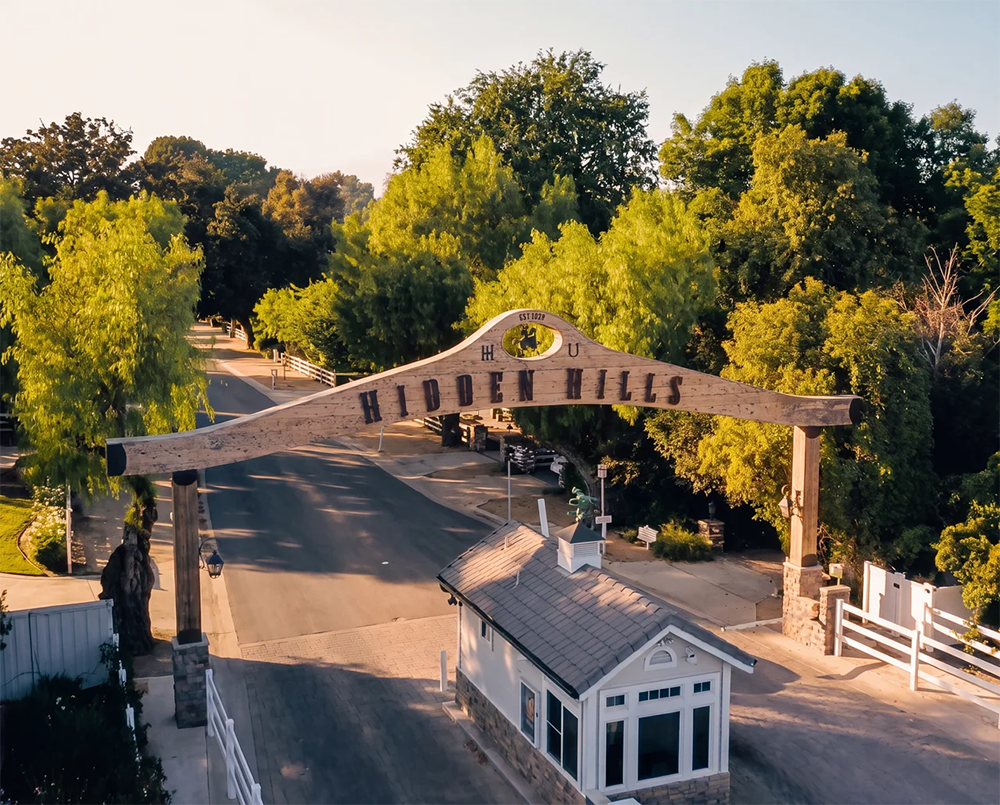

Citywide, Calabasas averages about $620 per square foot with a median sales price around $1.8 million — but that spans a very wide range of properties, including condos and townhomes. The gated communities people usually mean by “Calabasas” run higher: around $780 per foot, and $950 to well over $1,000 in the premium gated communities.
Hidden Hills sales have been hovering just under $1,000 per foot, with a median close of about $6.45 million over the past three years. Among active listings, the median is probably a little over $1,200 per foot.
In Hidden Hills, you are paying for dirt: with an acre minimum, flat usable pads are the premium, and the value is in what you can do with the lot — an old ranch house on a great acre at $4 to $5 million is essentially a lot with a free house on it. In Calabasas, the land is baked into the price: a 10,000 or 15,000 square foot lot in Calabasas Park, more in The Oaks, bought for what is already there — probably why the price per foot is lower.
Carrying costs: property taxes run about the same base — roughly 1.1 to 1.2% with school bonds — but the add-ons differ:
- Hidden Hills association dues are not flat. Assessed at 25 cents per $100 of assessed value — about $15,000 a year on a $6 million house, scaling with what you paid — they fund the gates, community center, and trails.
- Hidden Hills land costs money to keep. Landscaping an acre is real money, some homes are on septic, and horses are their own line item.
- Calabasas gated HOAs generally run a few hundred dollars a month. The one to note is The Oaks, which carries Mello-Roos — roughly $2,000 to $4,000 and up per year on top of the HOA dues.
- Fire insurance is, frankly, ugly in both cities right now. Budget for it either way.
One benefit to both: neither city is inside the L.A. city limits, so there is no ULA “mansion tax” — a measurable savings versus areas like the Palisades and Bel-Air.
For a line-by-line look at taxes, dues, and insurance in both cities, see what it really costs to own a home in Calabasas and Hidden Hills.
How Do Privacy and Security Compare?
Hidden Hills is a gated city — the entire thing. Three staffed gates (Long Valley, Round Meadow, and Burbank), and inside it is all private streets: the association owns the roads and runs the gates and guards. There is no public street anywhere inside. The Sheriff’s Lost Hills station covers both towns — but in Hidden Hills, nobody reaches your street without being called in.
Calabasas is a regular city that happens to have gated neighborhoods inside it. The gate sits at the entrance to The Oaks, Mountain View Estates, The Bellagio, or Westridge — not at the entrance to the city. Past the gate you are in a private neighborhood, but you drove there on public streets. The Oaks does have a second, inner gate for an even more exclusive enclave.
IMPROTA INSIGHT “In Calabasas, the gate keeps strangers off your block. In Hidden Hills, the gate keeps strangers out of your town.” — Jason Improta
There is no place inside Hidden Hills where someone can just sort of be — no store, no park, no reason to linger. A car on your street is a neighbor, a guest, or a contractor with a pass. The culture is the bigger difference: Hidden Hills runs on privacy as a value — one reason you see a lot of famous people there. Nobody takes pictures; nobody asks. You might live three doors down from a movie star and just smile, nod, and keep walking. No through traffic, no tour buses — paparazzi physically cannot get to you at home.
Calabasas has privacy at home and public life in town. You will run into your neighbors at The Commons — that is part of the point — and you will see famous people photographed there, but not in their driveway.
It shows up in real estate access, too. Hidden Hills showings are appointment-only, called in at the gate — no driving by, no Sunday cruising; you get in with your agent or not at all, and some of the best properties trade quietly, never hitting the open market. In Calabasas, gates vary, plenty of homes are not gated, and there is even a weekend open house culture.
How Do Schools and Family Life Compare?
It is all Las Virgenes — same district, basically a wash — but a few practical differences are worth knowing.
The elementary map is the biggest one. Round Meadow Elementary sits right at the Round Meadow gate and is primarily fed by Hidden Hills — kids ride bikes and golf carts to school — with parts of West Hills and Bell Canyon also feeding in. Calabasas splits between A.C. Stelle and A.E. Wright middle schools, generally feeding Calabasas High, though a fair number migrate to Agoura High. If a specific elementary school is the draw, that alone may inform your choice.
Then the private school question. At Hidden Hills price points, many families choose Viewpoint, Chaminade, Sierra Canyon, or Harvard-Westlake. Part is money; part is the privacy you were buying in the first place. Calabasas leans more public, though its higher price points send plenty of kids to those same schools.
Day to day, Calabasas is easier — playdates down the street, the swim and tennis center close by, parks everywhere, and a 16-year-old with options within a mile; that same teenager in Hidden Hills needs a ride. But Hidden Hills offers a different kind of childhood — bikes on nearly car-free streets, the trails, the Fiesta days. In our opinion, it has one of the most community-oriented vibes we have ever seen.
One thing that usually goes unspoken: kids at Calabasas High know exactly which side of the gate everyone lives on. Not a problem, per se — but a thing. Some Hidden Hills families go public specifically for that broader environment; some go private to avoid it entirely.
What Are the Commute, Errands, and Restaurants Like?
The commute is roughly a wash — both cities sit along the 101, and Century City or Santa Monica is a drive from both. Malibu gives Calabasas the edge: about twenty minutes to PCH, a few more from Hidden Hills.
Errands favor Calabasas — Gelson’s, Ralphs, Albertsons, or Bristol Farms over in Woodland Hills, plus the dry cleaner and CVS, all close. Hidden Hills has nothing inside the gate, so everything is a slightly longer drive — though DoorDash, Instacart, and Amazon help.
Calabasas has the restaurant scene: Sugarfish, Toscanova, and King’s Fish House at The Commons; Sagebrush Cantina and Pedalers Fork in Old Town. Hidden Hills uses the same restaurants with a couple of minutes added. Neither is a true shopping town, so residents of both end up at Westfield Topanga or The Village in Woodland Hills. Calabasas, you are living in it. Hidden Hills, you drive a few more minutes to get to it.
How Do Resale and Long-Term Value Compare?
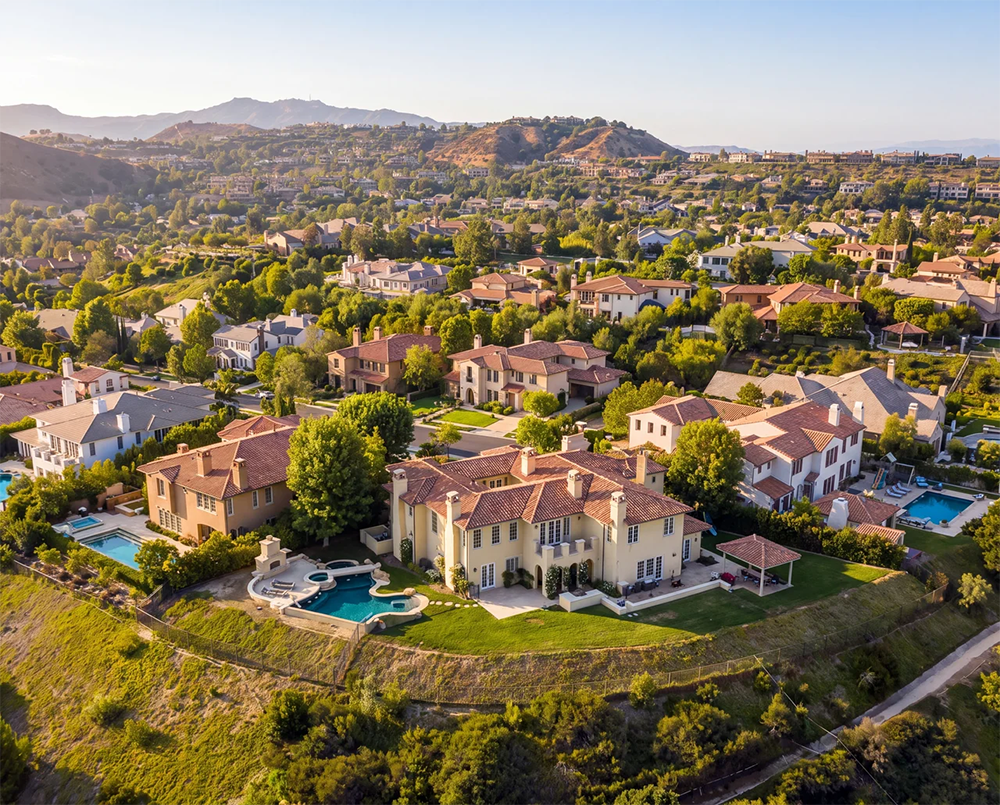
Be careful with assumptions here. People hear “Hidden Hills” and assume it is the safer bet. Over a long enough window it is probably the better bet — but not necessarily the safest one. Mechanically, these are two totally different markets.
Calabasas is deeper and faster. Roughly 40 to 60 homes close a month, selling in 30 to 40 days with a couple of offers on average, so you usually have the comps — you can price an Oaks home within a few percent. It behaves like a normal luxury suburb, moving with rates and the broader L.A. market. When you need to sell, you can sell.
Hidden Hills is thin. Four sales in a month — or fewer — is the whole thing. Roughly 650 homes, and most people do not leave — comps are scarce and every property is different. A median down 12% year over year, or price per foot up 14.5%, is not a trend; it is a small sample. You read Hidden Hills property by property, not by charts.
Calabasas holds value the way a good neighborhood does — the HOA keeps everything looking right, schools maintain demand, inventory refreshes steadily. The caution is over-improving: do not put $1 million into a house with a $4 million ceiling; you will not get it back. Hidden Hills holds value because the land cannot be replicated — long term, that is the win — but when the value is in the dirt, the house is depreciating on top of appreciating land.
Selling looks different, too. In Calabasas you list, get showings the first weekend, and are likely in escrow within a month if priced right — and rates matter, because a $2 million buyer is probably financing. In Hidden Hills the pool is smaller, heavier on cash, and frequently rate-indifferent: the home sells when the right person shows up. Median days on market runs around 192 — normal here; six months, even a year, is not crazy. Price off the last trophy sale instead of your own lot, and you may sit even longer.
In general: Calabasas is a house you can count on selling. Hidden Hills is land you can count on being worth more, eventually, to somebody — on its own timeline.
Which Buyers Belong in Hidden Hills, and Which in Calabasas?
Most buyers could genuinely go either way. A few types are not even close:
- Horse people: Hidden Hills, and it is not close — an equestrian city where neighbors will not complain about the smell. You are not doing horses in Calabasas, ever. If the horse is real, there is one answer.
- Serious entertainers and security-minded buyers: usually Hidden Hills, though parts of Calabasas fit — the second gate inside The Oaks in particular. The worry is fans and paparazzi, and a gated city where nobody cares who you are is exactly the product. We see a lot of working actors and executives who just want a nice, private life.
- Builders and developers: Hidden Hills again, even if they have slowed a little lately. Buying dirt to build big — to sell or keep — is clearly a Hidden Hills play.
- Downsizers and lock-and-leave buyers: probably Calabasas. Empty nesters do not want an acre, a septic system, or a landscaping crew — they want a finished house, an HOA that handles the outside, restaurants minutes away, and the freedom to leave for a month. Hidden Hills can work, but that is a lot more property to babysit.
- Stretch buyers: Calabasas, just based on math. $2 to $3.5 million is Calabasas by price point alone, and even at $4 million, stretching into the bottom of Hidden Hills buys an address and a project — often without the renovation budget it needs. The same money in Calabasas is a finished house and a ready-to-go lifestyle.
- Young families who want the village feel: most likely Calabasas — kids on the cul-de-sac, swim clubs, everything five minutes away. Hidden Hills is a wonderful place to grow up too, but with more driving and without that plug-in community feel.
- Privacy-minded families with young kids and a real budget: the one family type we push toward Hidden Hills — a genuine desire for quiet and space.
- Anyone on a 3-to-5-year timeline: most likely Calabasas. Hidden Hills sells on its own schedule; if the plan has a need-to-sell-by date, we want you in a market that moves.
IMPROTA INSIGHT “Hidden Hills is for people buying what the land does — horses, construction, privacy, space. Calabasas is for people buying what the community does — convenience, schools, a finished house.” — Jason Improta
Where Do Buyers Choose Wrong, and What Do They Misjudge?
It happens, but not often — the differences in price and lifestyle are big enough that most people figure it out before closing escrow. When we do see a switch, the patterns are consistent.
Hidden Hills buyers who should have gone to Calabasas fell into one of three traps. They loved the idea of land — the barn, the someday horses — and turned out to be house people: two years later there are weeds in the lot, the barn is storage, and the gardener bill stings. Or they underestimated the quiet — romantic until it is Tuesday night, you are out of milk, and the drive out feels remote, even lonely. Or they bought the cheapest property just to get the address, ending up with an overwhelming project or freeway noise.
Calabasas buyers who should have gone to Hidden Hills usually genuinely wanted privacy and land — really private, not just quiet-street private — or they were builders with money, vision, a pickleball court in mind, and a need for the larger canvas only Hidden Hills offers.
What people misjudge is this: the difference is not the gate — both have gates. The difference is what is on the other side. Hidden Hills is a small town with no downtown; Calabasas is a series of neighborhoods inside a real city. And Hidden Hills is not “more Calabasas” — it is a very different life at some overlapping prices. Ultimately, community style decides it: manicured, cohesive, close to everything — or rustic, with animals, space between neighbors, and a few extra minutes to drive for milk.
What Can a Story From Both Sides of the Gate Teach You?
By the time buyers reach us, the desire is usually predetermined — they know whether they want horses or the cleaner planned-community vibe, and finances decide much of the rest. What we see more often is clients who change over time.
We had clients who bought into The Oaks when their children were young — relocated from the Westside and raised their daughters in a beautiful home on a relatively small lot. Once the girls reached high school, they realized what they had always wanted was the land and the chance to create exactly what they envisioned. We sold that home and found them a huge, flat Hidden Hills property — giant grassy yard, chicken coops, outdoor sitting areas, an enormous pool, a barbecue area. They are still there today. Same family — two completely different chapters.
So Which Is Right for You, Hidden Hills or Calabasas?
Hidden Hills is for buying what the land does. Calabasas is for buying what the community does. Neither is better — and most people know within ten seconds of driving through each gate. You do not have to guess: we work both markets every day and are happy to show you both sides of the gate in one afternoon. Reach out to The Improta Team, and we will start with an easy question: what does your Saturday morning look like?
Frequently Asked Questions
Is Hidden Hills more expensive than Calabasas?
Generally, yes. Hidden Hills sales have hovered just under $1,000 per square foot with a median close of about $6.45 million over the past three years; Calabasas citywide averages about $620 per foot with a median around $1.8 million, its gated communities running roughly $780 to over $1,000. At $4 million, Calabasas delivers a fantastic house; Hidden Hills may only deliver a teardown.
Do Hidden Hills and Calabasas have the same schools?
Both are served by the Las Virgenes Unified School District, so on paper it is basically a wash. The practical differences are at the elementary level — Round Meadow Elementary is primarily fed by Hidden Hills — and in private school patterns, where many Hidden Hills families choose schools like Viewpoint, Chaminade, Sierra Canyon, and Harvard-Westlake.
Is Hidden Hills more private than Calabasas?
Structurally, yes. Hidden Hills is an entirely gated city — three staffed gates, private streets, nothing inside for a stranger to visit — so nobody reaches your street without being called in. Calabasas is a regular city with gated neighborhoods: the gate protects your block, not the whole town.
Can you have horses in Calabasas?
No — if horses are part of the plan, Hidden Hills is the answer: an equestrian city with acre-minimum lots, bridle trails instead of sidewalks, and a culture built around animals and land.
Which is better for resale, Hidden Hills or Calabasas?
They behave differently. Calabasas is deeper and faster — homes typically sell in 30 to 40 days — so it is the market to count on when you need to sell on a schedule. Hidden Hills is a thin market of roughly 650 homes with median days on market around 192; it rewards patience because the land cannot be replicated. Long term, Hidden Hills is probably the better bet — but not necessarily the safest one.