


What Should You Know Before Buying in Calabasas?
Ask ten families why they moved to Calabasas and you’ll hear versions of the same four answers: the schools, the safety, the community, and an address that means something.
What you won’t hear as often is how different one Calabasas community is from the next — or how many buyers end up in the wrong one because they fell in love with a house before they understood the city. Calabasas isn’t one market. It’s a collection of communities, gated and not, each with its own personality, price logic, and type of buyer. Choosing well requires knowing the difference.
This guide is the conversation we have with our own clients before they ever write an offer here. It covers who Calabasas really fits, how the schools drive everything, what each major community is actually like, when the gate is worth it, what commands a premium and what doesn’t, and the diligence that matters in a hillside, fire-zone city built mostly in the ’80s, ’90s, and early 2000s.
It isn’t a sales piece. It’s what we’d want our own family to know before buying here — because we did exactly that.
Why Do Families Choose Calabasas?
The typical Calabasas buyer is a couple in their late thirties to fifties with kids in school — and the search almost always starts the same way: with the school system. From there, everything else Calabasas offers comes into focus.
Safety and security are the baseline. Calabasas offers gates, patrols, and controlled access across much of the city, and for many families — especially when one or both partners has a public-facing career, or one travels frequently — that security isn’t a luxury. It’s the precondition for raising kids somewhere with peace of mind. It’s often one of the first things we ask about: gated or not?
Community comes next. Parks, birthday parties, kids riding bikes in the street. When buyers have young children, one of the most common questions we hear is simple: are there other kids in the neighborhood?
And then there’s the most subtle driver — the one that’s often unspoken. The name Calabasas carries cachet. Buyers rarely say it out loud, but the address matters, even when they don’t admit it. Understanding which of these four drivers matters most to you — schools, security, community, or cachet — is the single best predictor of which Calabasas community you’ll be happiest in. The rest of this guide is built around that idea.
Why Should Calabasas Buyers Start With the Schools?
Schools are arguably the single biggest demand engine for buyers coming to this area. Most searches begin with ‘we want a great school system,’ and buyers quickly discover that Calabasas is one of the closest communities to Los Angeles that combines a top school district with safety and quality of life. By the time families call us, they’ve usually already researched Bay Laurel, Round Meadow, Chaparral, and the rest.
That demand shows up in prices. You’ll often see a home on the Calabasas side of the Las Virgenes Unified boundary sell for more than a comparable home in Woodland Hills just across the line. Buyers should understand what that premium actually buys: a K-through-12 timeline, not just a property.
Two practical points matter here. First, verify the school assignment for every specific property. District and school boundaries are not always as clean as they appear on a map, and assumptions get expensive. Second, know that Las Virgenes Unified extends beyond Calabasas — into Agoura and parts of surrounding communities — which sometimes gives school-driven buyers more options than they realized.
Timing is part of the school story too. Most families want to move in spring or early summer so the kids start school in the fall. That’s completely logical — and it means you’re competing against every other family on the same calendar, which we’ll come back to in the mistakes section.
One more thing buyers don’t always consider: the schools that brought you here — and the premium you paid because of them — will be working for you on the day you sell. In Calabasas, the school system isn’t just an amenity. It’s the resale engine.
What Are the Main Communities in Calabasas?
Calabasas is a collection of distinct communities, and matching the buyer to the community is most of the battle. Here are the ones that come up most in our conversations.
The Oaks of Calabasas
The Oaks is widely considered the premier community in the city — guard-gated, built mostly in the early-to-mid 2000s, with a community recreation center, tennis courts, gym, pools, and playgrounds. It’s home to entertainers, executives, athletes, and founders, and we regularly see families start elsewhere in Calabasas and work their way up to the Oaks. If cachet is one of your four drivers, the Oaks is part of the conversation. It’s also not everyone’s cup of tea — and it isn’t supposed to be.
Mountain View Estates
On the other side of the freeway in unincorporated Calabasas, Mountain View Estates was built in the ’90s and typically offers larger homes on larger lots. The last few years have brought a measurable wave of major remodels. It’s a little less flashy and a little more established — more for your money. The Mountain View buyer often wants Oaks-level security and scale but finds the Oaks a bit crowded for the price. This is the buyer who says they don’t need the scene.
Calabasas Park Estates
Just below the Oaks along Parkway Calabasas and wrapped around the country club, Park Estates is the classic family community — built in the ’80s and ’90s with a wide range of home sizes, from around 2,000 square feet up to 5,000 or 6,000. This is the security-and-schools buyer who wants the Calabasas lifestyle at a number that still feels reasonable. The address carries some cachet, but that’s not what’s driving the purchase.
Vista Pointe
Also off Parkway Calabasas, on the other side of the golf course, Vista Pointe is more view-oriented, with homes built along the hills. It sits comfortably in the middle of the road for the Calabasas family buyer we’ve been describing.
Westridge
Gated, at the bottom of Parkway Calabasas and closer to the Commons, Westridge is slightly newer than Park Estates with a very similar demographic. This buyer wants a newer-construction feel without Oaks pricing — very often a family relocating from the west side of the Valley, driven by security and schools.
Mont Calabasas
Off Las Virgenes on the far side of the city, Mont Calabasas can feel slightly removed — and delivers more for your money because of it. We often see out-of-area buyers land here: young families prioritizing the Las Virgenes school district who are willing to trade being in the center of everything for a better price point.
Mountain Park
On the opposite side of the city off Mulholland, closer to Viewpoint, Mountain Park offers larger gated homes and genuine seclusion. This is the buyer who doesn’t need to be in the middle of it all — and knows it.
The Bellagio
Close to the lake, the Bellagio’s homes are built nearer to one another with smaller yards, and fewer of them have pools. It’s a more value-conscious entry into the gates, the schools, and the safety — and it sees healthy turnover as owners move up within Calabasas over time. For many families, it’s the first chapter of a longer Calabasas story.
Should You Buy in a Guard-Gated Community in Calabasas?
Gated versus non-gated is one of the most common conversations we have — though in truth, most buyers already know what they want before they ask.
Here’s the honest version. Calabasas is a low-crime city across the board, gated or not. A gate is never an impenetrable perimeter, but it is a real deterrent to opportunistic crime, and it filters traffic and controls access. For most buyers, the feeling of security is worth real money — and that’s a legitimate thing to pay for, as long as you’re clear-eyed that it’s largely the feeling, and the convenience, you’re buying.
The gate comes with an HOA, and HOAs come with their pluses, minuses, and monthly dues — typically somewhere between about $210 and more than $700 a month in Calabasas. Gated homes generally carry a price premium over comparable non-gated homes. And for some buyers, the purchase is partly signaling: they’d rather say ‘we’re in the Oaks’ than name a street. That’s not a criticism — cachet is one of the four drivers for a reason — but you should know when you’re paying for it.
When a buyer tells us they want the gate, we ask why. Is it so you don’t worry about the kids playing outside? Because you want a community where you’ll know your neighbors? Because you believe it protects resale value? Or is it simply the address? All four are valid — but they lead to different communities and different budgets.
And plenty of buyers want the opposite: no HOA, no dues, park whatever you want out front, paint the house any color you like. They want chickens. Calabasas has room for them too.
IMPROTA INSIGHT
“We see buyers stretch to get into the trophy gate and end up house poor for a feature that solved a problem they didn’t actually have. What they really wanted when they moved here was the security and the schools.”
— Jason Improta
For HOA dues by community, Mello-Roos, and insurance, see our guide to the cost of owning a home in Calabasas.
What Is Worth Paying a Premium for in Calabasas?
Since around 2022, we’ve watched the gap widen between fully renovated homes and dated ones — driven by rising construction costs, longer permit timelines, and the scarcity of quality contractors. The result: buyers pay real premiums for turnkey, genuinely well-executed homes, because nobody wants to spend two years of their life fighting through a full renovation. That premium is rational. Pay it knowingly.
Single-story homes — or homes with the primary bedroom downstairs — are another clear premium, and it grows every year. Calabasas is overwhelmingly two-story construction from the ’80s and ’90s, while the demand from move-down buyers, empty nesters, and families bringing an aging parent into the home keeps rising. Low supply, growing demand, real premium.
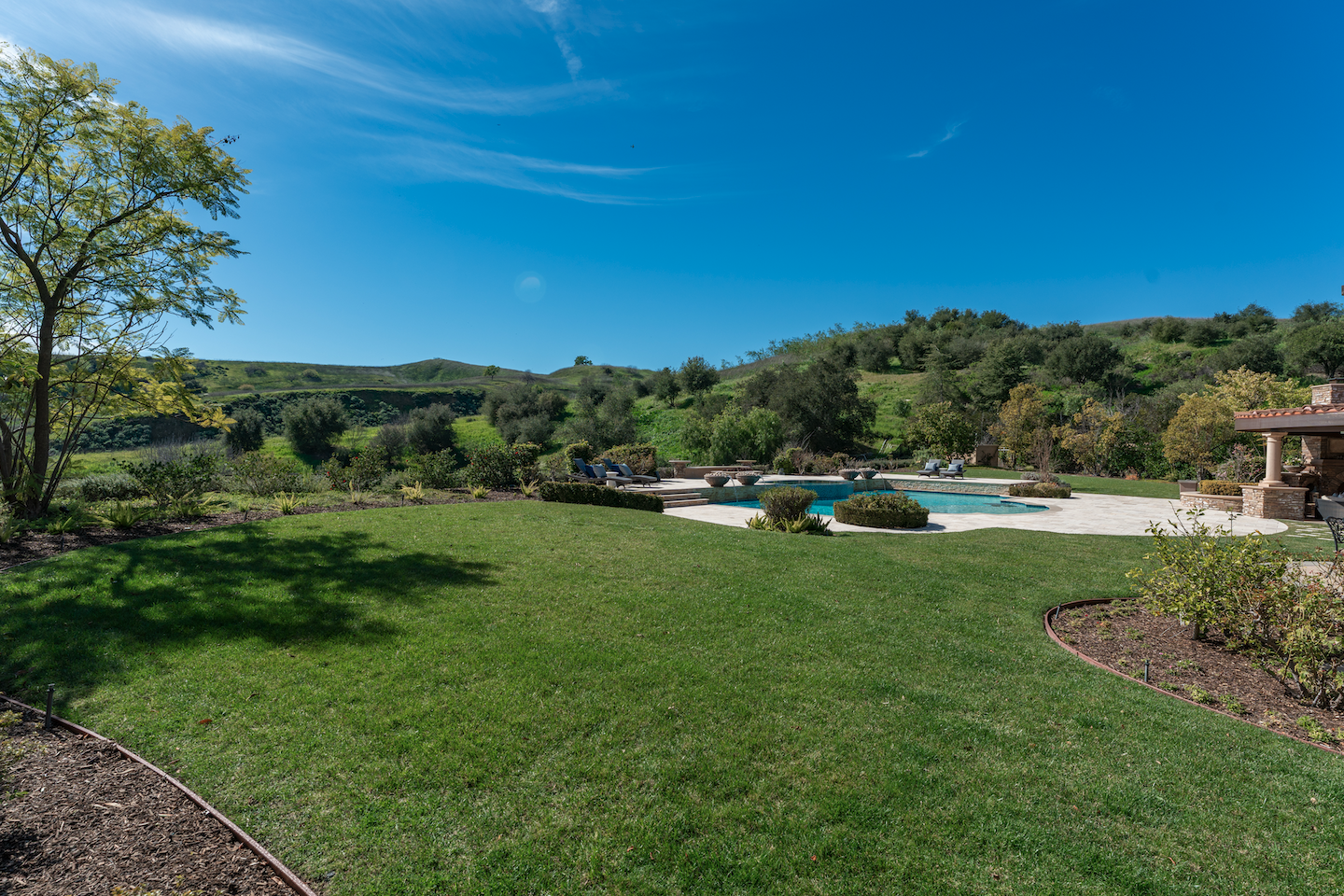
Flat, usable land carries a premium for the same structural reason: this is a hillside city. Room for a sport court, a pool, a trampoline, and actual grass for the kids is scarce, and priced accordingly. So is privacy without isolation — a home that doesn’t back up to a major street, has no neighbors directly behind, and enjoys real space on either side. In communities where homes are built close together, that separation is worth paying for.
Now the other side of the ledger — what buyers routinely overvalue:
- The cosmetic flip: the generic staged white-oak-and-brass remodel sitting on top of original systems. You’re paying renovation prices for paint-deep work.
- The ‘view’ that’s mostly rooftops of your own community — and remember, when a market softens, the view premium is one of the first things to shrink.
- The smallest or worst house in the trophy gate, bought on the theory that the address will do all the work. It usually doesn’t.
- Paying full retail for pools, theaters, wine rooms, and elaborate outdoor kitchens. Enjoy them — just don’t give them dollar-for-dollar value in your offer.
- The staging. Well-produced staging sells a feeling. Make sure you know exactly what you’re buying once the furniture leaves.
How Does Buying a Home in Calabasas Actually Work?
Calabasas and Hidden Hills may be neighbors, but they are two different markets with two different playbooks.
Calabasas has thousands of homes across dozens of communities and multiple price tiers, which means that even in tight years there’s a functioning open market with real selection. Hidden Hills is roughly 650 homes in total, with far smaller annual turnover — not just a tight market, a scarce one. In Calabasas, you wait for the right house. In Hidden Hills, you sometimes wait a year for any house that fits your specs. (We cover that side of the fence in our Hidden Hills Buyer’s Guide.)
Calabasas moves at typical luxury speed: a well-priced, finished, updated property in season sells fast, while dated and overpriced homes sit — with room to negotiate. Right now, overall inventory is relatively high, but much of it is new development at high prices; narrow your search to the middle segments and you’ll find the market is tighter than the headline numbers suggest.
Negotiation here is driven by comparables. There are enough sales and enough conformity between properties to read the market clearly — which means the skill is in execution: timing the calendar, reading the comps, and winning the offer. In Hidden Hills, comps are sparse and value runs through land quality, privacy, and replacement cost instead. Same zip-code neighbors. Completely different games.
“Calabasas is a market you shop. Hidden Hills is a market you access.”
What Homework Should You Do Before Buying in Calabasas?
Calabasas diligence comes down to four things. Miss any of them and the surprise can be expensive.
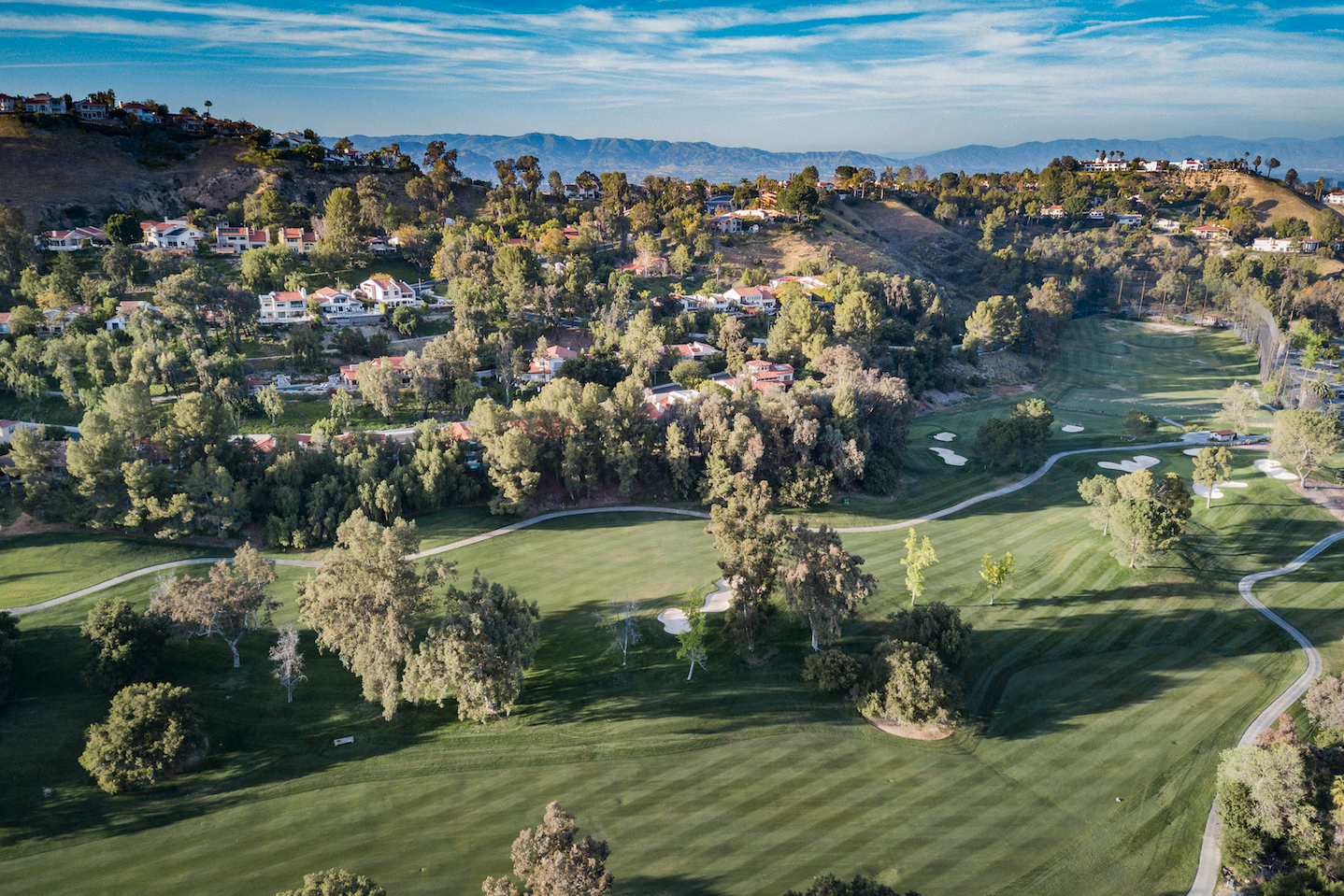
The dirt. Most of Calabasas is graded hillside from the ’80s, ’90s, and early 2000s — engineered pads, compacted fill, and slopes that are now decades old. Where does the house sit: on cut or on fill? Is that crack cosmetic, or movement? Serious diligence often includes a geologist or structural engineer. If you’re on or below a slope, find out who owns it — the HOA, the owner, or open space. HOA-maintained slopes shift the cost burden away from you, but can also mean assessments if the slope ever needs work; privately owned slopes are your liability. Evaluate drainage — hillside problems are water problems first — and scrutinize retaining walls: their age, height, permits, and whether they lean. Unpermitted or failing retaining walls are among the most expensive surprises a buyer can inherit.
The fire. Much of Calabasas sits in a very high fire hazard severity zone, and in 2026, insurance is a genuine carrying cost that affects financing and resale. Get an insurability read before you offer, not during escrow: have your insurance broker run the address and tell you whether you’re looking at an admitted carrier, the California FAIR Plan, or something in between — the spread changes your real monthly cost. Confirm the property’s fire hazard designation, verify whether it has passed its defensible space inspection, and look at hardening: ember-resistant vents, enclosed eaves, and dual-pane windows can move premiums dramatically for the same zone. In gated communities, add the HOA layer — ask about the association’s master policy and its own fire posture, including any changes to dues or triggered assessments.
The paper. Pull the full permit history. Know what’s finaled versus merely issued, confirm that the renovation you’re paying for matches the permit record, and reconcile the assessor’s square footage against reality.
The pipes. Homes built in the ’80s and ’90s — and even the early 2000s — have systems reaching the end of their expected lifespans: electrical panels, plumbing, HVAC, sewer lines. Understand what you’re buying beneath the finishes.
The common thread: we want this information working for our clients before the offer, when it’s leverage — not during escrow, when it’s a crisis.
IMPROTA INSIGHT
“We’d rather know the insurance number, the permit history, and the condition of the slope before our client writes the offer — not discover them during escrow. In Calabasas, diligence is four things: the dirt, the fire risk, the paper, and the pipes.”
— Jason Improta
What Does Daily Life in Calabasas Look Like?
Mornings belong to school drop-off — which has quietly become its own social hour. Afterward, the crowd migrates to coffee: Calabasas Coffee House has become the regulars’ spot, complete with a weekend jog club that rolls out from its front door, and Pedaler’s Fork in Old Town still draws its faithful.
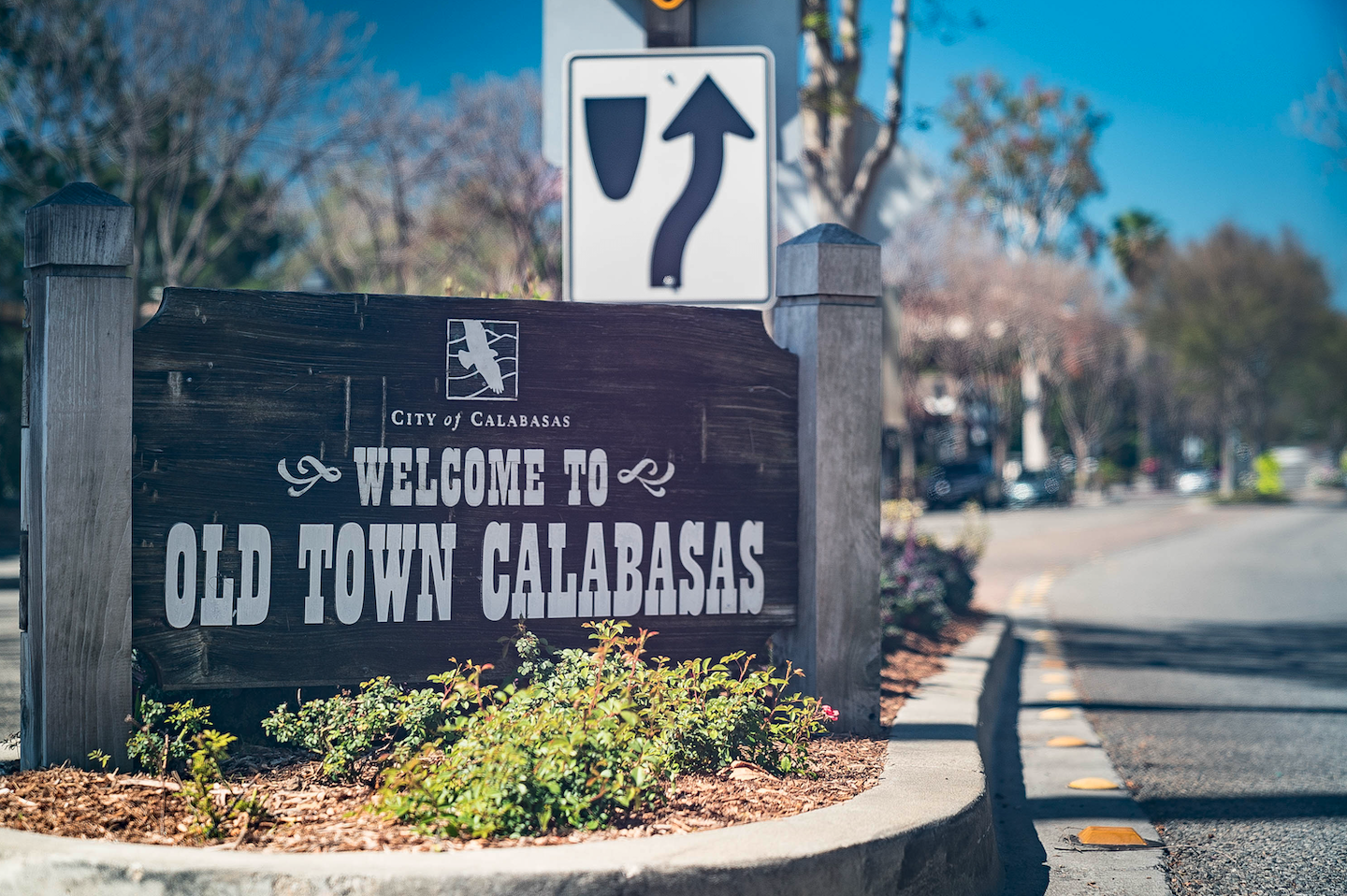
The Commons functions as the town square. It’s in the middle of a major redevelopment right now, with new businesses on the way, but its role hasn’t changed: it’s where you run into everyone — at King’s Fish House, at Ralphs, on a Saturday errand. Old Town has its own rhythm, anchored by the Saturday morning farmers market where the whole city seems to gather, and the food scene keeps leveling up, with newer arrivals like Jon & Vinny’s joining the mix.
One thing you won’t find is nightlife — and around here, that’s considered a feature, not a bug. Early nights in are the default, which may explain why flat yards and pools carry the premiums they do: the backyard is the venue.
Weekends revolve around youth sports, the farmers market, tennis, and the world-class hiking that surrounds the city, with trails radiating out in every direction. The beach is twenty to thirty minutes away. And the week ends the way it’s supposed to: family dinner.
What Mistakes Should Calabasas Buyers Avoid?
The most common mistake in Calabasas is buying the house instead of the community. Beautiful finishes can land you in a neighborhood that isn’t right for your family — especially if you don’t know the city well and don’t have someone guiding you through the differences. When we moved here ourselves, we intentionally leased for the first year so we could get our bearings before choosing where to plant our flag. Not everyone wants to lease for a year, but the principle holds: know the community before you commit to the house.
The second mistake is over-buying the gate — stretching financially for the trophy address and ending up house poor for cachet, when what the family actually needed was the security and the schools, both available at a friendlier number. Related: buyers who’ve never lived in a gated community routinely underestimate the carrying costs. Monthly dues are visible if you look; other costs are easier to miss — in the Oaks, for example, Mello-Roos is embedded in the tax bill, typically another $2,000 to $4,000 a year that many buyers never factored in.
The third mistake is timing. Needing a Calabasas address to register the kids for school is a real deadline — and it compresses your search into the exact window when every other family is shopping on the same calendar. Buyers in that squeeze end up paying full price for whatever happens to be available that month. Start earlier than feels necessary.
As for our advice: the buyers who get the best outcomes here are the ones who use us fully. With the way commissions are structured now, buyers are paying directly for expertise — so extract every dollar of it. We’ll tell you when to walk away from a property with problems that can’t be properly resolved, and we’ll guide every step from first tour to keys.
A few years ago, a family reached out to us through social media from another country. They knew we’d raised our own family here and had served this community for years, so they trusted us to find the right property and the right community — while they were still overseas. We found them a great match, negotiated the entire transaction, and secured one of the best prices that community had seen in years. They’ve since renovated the home and are raising their kids there. We’ve done five more transactions together since.
We’ve closed 68 sales in Calabasas since 2006, totaling $140.4 million, according to MLS records. The full breakdown is on our sales record.
If Calabasas is on your list — this year or a few years from now — we’d welcome the conversation. We’ll help you find your community first, then your house. Contact The Improta Team to start the conversation.
IMPROTA INSIGHT
“That kind of loyalty isn’t given. It’s earned.”
— Jason Improta
Calabasas Buyer FAQs
What school district serves Calabasas?
Calabasas is served by the Las Virgenes Unified School District, whose reputation is the single biggest demand engine for the local market. Always verify the school assignment for a specific property — boundaries are not as clean as they look on a map, and the district also extends beyond Calabasas into Agoura and parts of surrounding communities.
Which Calabasas community is right for my family?
It depends on which of the four drivers matters most: schools, security, community, or cachet. The Oaks is the premier guard-gated address; Calabasas Park Estates is the classic family community around the country club; Westridge offers a newer feel near the Commons; Mountain View Estates trades flash for space; Mont Calabasas and the Bellagio offer value entry points; Vista Pointe adds views; Mountain Park adds seclusion.
Are Calabasas gated communities worth the extra cost?
Calabasas is a low-crime city gated or not, but gates are a genuine deterrent to opportunistic crime and provide filtered traffic and controlled access. Gated homes typically carry a price premium plus HOA dues of roughly $210 to more than $700 per month. Whether that’s worth it depends on why you want the gate — security, community, resale, or the address itself.
Does Calabasas have Mello-Roos?
Some communities do. In the Oaks of Calabasas, for example, Mello-Roos is embedded in the property tax bill — typically an additional $2,000 to $4,000 per year that buyers often overlook when budgeting. Always review the full tax bill, not just the base rate, before writing an offer.
Is fire insurance an issue when buying in Calabasas?
It’s one of the most important diligence items. Much of Calabasas sits in a very high fire hazard severity zone, and insurance meaningfully affects monthly cost, financing, and resale. Get an insurability read before you offer: have an insurance broker run the address to see whether it qualifies for an admitted carrier or the California FAIR Plan, and check the home’s defensible space status and hardening features.