


What Should You Know Before Selling in Hidden Hills?
Selling a home in Hidden Hills is nothing like selling one anywhere else — not because the homes are bigger or the prices are higher, but because the market itself plays by different rules.
This is a community of only about 650 home sites, where most owners don’t need to sell, where the comps are sparse and often distorted, and where a single celebrity purchase next door can warp an entire street’s sense of value. It’s a market where the difference between the best price and the best offer can be hundreds of thousands of dollars, and where the decisions a seller makes before the listing goes live matter more than anything that happens after.
We wrote this guide the same way we wrote our Hidden Hills Buyer’s Guide: as the honest conversation we have with our own clients. It covers the pricing mistake that costs sellers the most, how to price when the comps tell you almost nothing, when off-market actually makes sense, what today’s buyers pay premiums for, how to prepare a property, how to market when privacy matters, what timing really looks like, and how to tell a strong offer from a tall one.
If you own a home in Hidden Hills — whether you’re selling this year or simply want to understand what your property is really worth — this is for you.
The Biggest Mistake: Pricing Off Outlier Comps
The number one mistake Hidden Hills sellers make is overpricing based on outlier comps.
It’s easy to see why. Between spectacular new construction, celebrity transactions, and headlines about record sales, owners naturally add a premium to their own property. And Hidden Hills is uniquely vulnerable to this, because the comps here are irregular and often distorted. When a home sells at a premium simply because a celebrity wanted the house next door, that sale tells you nothing about what a similar property in another part of the community is worth. Trophy sales aren’t comps. They’re one-off transactions driven by buyer-specific factors.
The median Hidden Hills buyer is paying for land, gates, and lifestyle — and today’s buyers are sharp about the difference between a true turnkey estate and a dated house on good dirt. Meanwhile, this is a small city where everyone talks. Overpriced listings sit, the days-on-market number becomes its own problem, and by the time a seller capitulates through price reductions, the final sale price frequently lands below where an accurately priced launch would have landed it.
The homes that struggle most are the in-between ones: the house that’s genuinely nice but needs $1-2 million of work. In this price segment, buyers generally want one of two things — done, or a large property with a real development play. The middle is the hardest place to sell from.
We often hear sellers say, ‘We’re not in a hurry — let’s test it high.’ We understand the instinct. But testing doesn’t come free. It costs market freshness, negotiating leverage, and very often, real money at the closing table.
How Does Pricing Work When You Don’t Need to Sell?
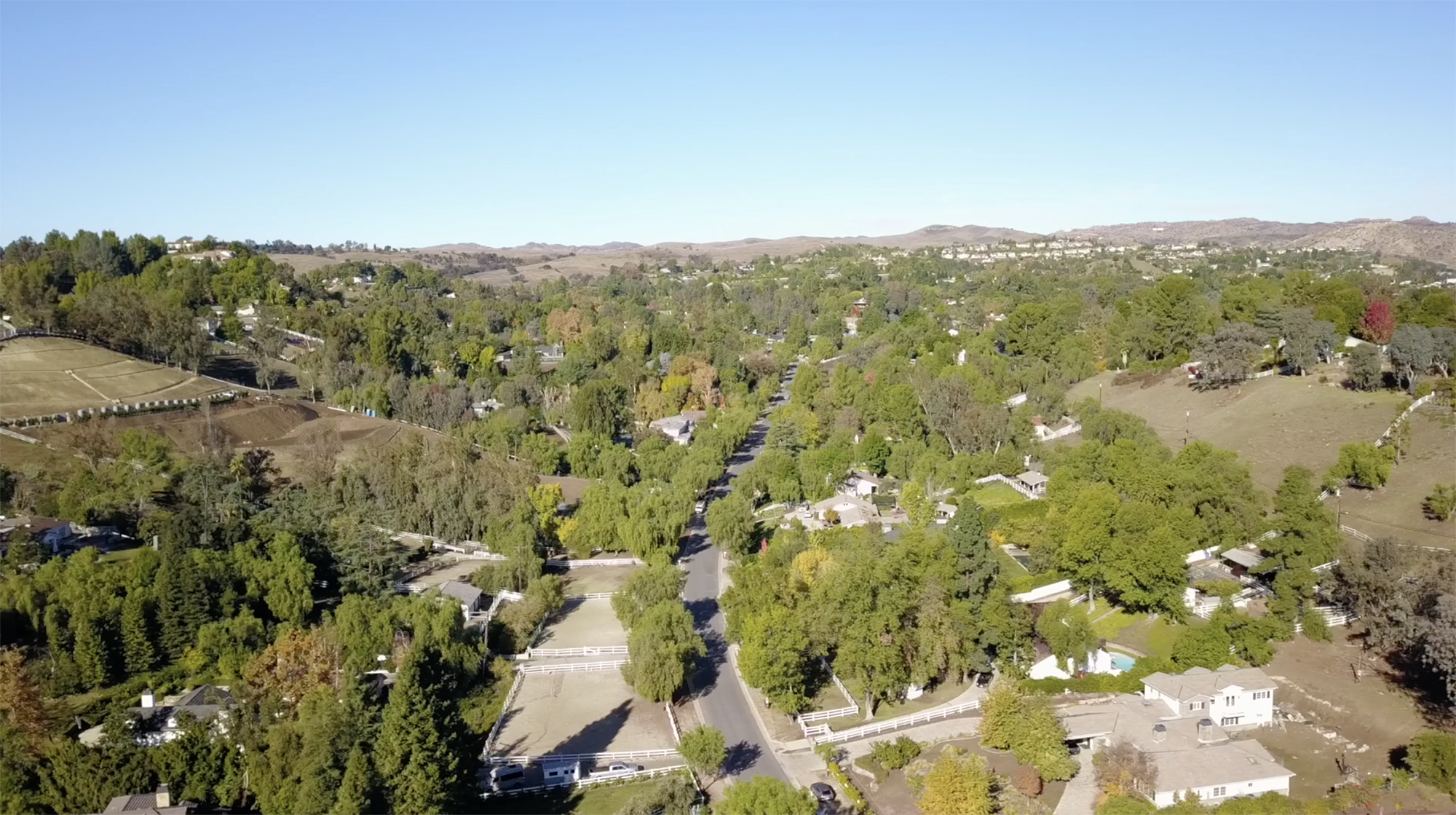
In a discretionary market like Hidden Hills, an asking price isn’t a prediction of value. When most owners don’t need to sell, the market carries an almost permanent overhang of aspirational listings — homes that are technically for sale, but only at an unrealistic number. The actual selling prices come from a small subset of transactions where a motivated seller met a real buyer.
So the first thing we do when pricing is separate the market into two populations: what traded, and what sat. Stale inventory’s asking prices tell us almost nothing about where buyer interest actually begins. The handful of homes that genuinely sold — even if it’s only three or four — tell us where the money is actually moving.
Because the comps are so irregular and sparse, we triangulate. Sometimes we build from the ground up: price per acre of land, plus the replacement cost of the improvements, adjusted for what a buyer would actually pay versus build. Sometimes we compare across geography instead of just time — Calabasas gated communities like the Oaks, Bell Canyon for its equestrian commonality, sometimes even Malibu. When the local data is thin, widening the lens is more honest than pretending three distorted comps are a market.
And when we sit down with a seller, we’ve learned the unproductive conversation is arguing about value. Your property is your asset, and that asset is wrapped in your story — we respect that. The productive conversation is about time and probability. At one price, we can expect to transact within a defined window. At another price, we’re waiting for an outlier buyer — and outliers show up on their own schedule. That could be a week, a month, a year, or more. The real question becomes: what is your actual timeline?
One more truth that’s sometimes hard to hear: cost basis and market value are two different facts, and the market doesn’t know your basis. Whether you spent $3 million or $7 million getting here has no bearing on what a buyer will pay today.
None of this means an unmotivated seller pricing high is wrong. They’re playing the lottery, and that’s a legitimate choice — as long as it’s made with open eyes. The only illegitimate choice is picking a very high price and expecting a fast result.
IMPROTA INSIGHT
“In this market, you don’t really get to choose your price — you choose your wait time. A high price buys a long, uncertain wait with the risk of a stale-listing discount at the end. An accurate price buys a short wait, with competitive tension doing the negotiating for you.”
— Jason Improta
Buyers weigh carrying costs carefully; our Hidden Hills cost-of-ownership guide shows what they are budgeting for.
Should You Sell Off-Market or on the MLS?
Hidden Hills is famous for off-market sales, so sellers are often surprised by our honest take: off-market is usually better for the buyer and the buyer’s agent than it is for the seller’s net. Exposure opens the door to more opportunity, and exposure is what creates the competitive tension sellers want. If the goal is to net the most money, our default recommendation is the MLS.
That doesn’t make it the right answer for every seller. Privacy has a real dollar value to some owners — entertainment clients, families mid-divorce or mid-lawsuit, certain estate situations, or simply not wanting the neighborhood to know. Those are legitimate reasons to trade some exposure for discretion.
There are also properties that show poorly but pencil well: tenant-occupied homes, mid-renovation projects, deferred maintenance, even a hoarder estate. The MLS is less effective when the presentation is bad, and quietly shopping a property to developers, investors, and the handful of agents who work with these buyers can achieve the same result without the public record.
And sometimes we already know the buyer — a neighbor, a tenant, a family that just lost out on another property. If they’re a real number, that can be a clean win for the seller. Finally, if a seller wants to test a make-me-sell fantasy number that we suspect the market won’t pay, testing it off-market at least has a learning-curve benefit without burning days on market.
We walk every seller through all of these scenarios and let them make the decision that fits. Both paths are legitimate. The choice just needs to be intentional.
“The MLS is how you find out what your home is worth. Selling off-market is how you sell it without finding out.”
What Do Buyers Pay Premiums For, and What Do Sellers Overvalue?
Start with what genuinely commands a premium in Hidden Hills right now.
Flat, usable land — especially the back of the lot. Acreage on paper means little if it’s all hillside. Buyers want land that can be built on, ridden on, and entertained on, which is why a flat 1.5 acres will outsell a sloped 2.5 acres here.
Done — to current standards. Not a ten-year-old renovation. And lately the turnkey premium has widened, not narrowed, because of construction timelines, carrying costs, and blown budgets. But understand: ‘done’ has a shelf life. Today’s current is tomorrow’s dated.
Street and position. Even inside the gates, the specific street matters enormously — think of the difference between a quiet loop street and a home that backs up to the 101.
Privacy within the community. Today’s buyers want a second layer of seclusion even inside a gated city: mature hedging, gated motor courts, homes you can’t see from the street. The paparazzi-era celebrity buyer changed what privacy means here.
Functional secondary structures. A real ADU or a guest house with a kitchen serves multigenerational families and staffed households alike.
Insurability infrastructure. Brush clearance, water pressure, generator capacity — the unglamorous systems tied to insurance are quietly becoming value drivers.
Now the harder list — what sellers believe matters more than it does:
- The horse facilities themselves. Many consider it a tragedy, but most of today’s buyers simply aren’t horse people. They want the right to have horses — the zoning, the trails, the identity — but a dated six-stall barn often reads as a demolition expense. The exception: a truly turnkey equestrian facility.
- Gross square footage. The difference between 9,000 and 12,000 square feet may not matter to a buyer at all if the extra footage lives in hallways, entryways, and unusable volume. Same bedrooms, same lot — the market often prices them closer than sellers expect.
- Renovation cost recovery. What you spent is not what it’s worth. Sellers rarely get their renovation dollars back at resale.
- Celebrity provenance. A famous former owner adds far less value than most sellers believe.
- The fantasy amenity checklist. Bowling alleys, salons, indoor sports courts — those carry less value than sellers think. The exception trending the other way: real wellness suites. Genuine gyms, saunas, recovery and massage rooms do carry weight with today’s buyer.
How Should You Prepare a Hidden Hills Home Before Listing?

Here’s the counterintuitive truth about pre-listing preparation at this level: most of the money isn’t spent to create value. It’s spent to remove the buyer’s reasons to discount.
A buyer between $5 and $15 million may not pay extra for a home that’s prepared well — but they will punish the one that isn’t. A $15,000 or $20,000 repair item can cost $100,000 to $150,000 in sales price, because the buyer isn’t pricing the repair. They’re pricing the doubt and uncertainty that comes with it.
What’s worth doing: know your permit history before the buyer does — unpermitted square footage discovered during due diligence shifts the negotiation dramatically. Selective pre-inspections — general, roof, septic — let you set the narrative on every issue before the buyer’s inspector does. Landscaping prep often earns the highest return of any dollar spent, because Hidden Hills value is driven by the land itself. And staging, for all the reasons it works everywhere, still matters here.
What’s wasted: full kitchen and bathroom remodels right before listing almost never recoup. Replacing things the buyer will replace anyway is a mistake. Smart-home technology investments generally return negative. And the fantasy amenities we just covered have a much smaller buyer pool than sellers realize.
Prepare the property like a litigator preparing a case: eliminate every argument the other side could make. That’s where preparation money earns its keep.
IMPROTA INSIGHT
“The buyer isn’t pricing the repair. They’re pricing the doubt. A twenty-thousand-dollar item left unaddressed can cost a seller six figures at the negotiating table.”
— Jason Improta
How Do You Market a Home When Privacy Matters?
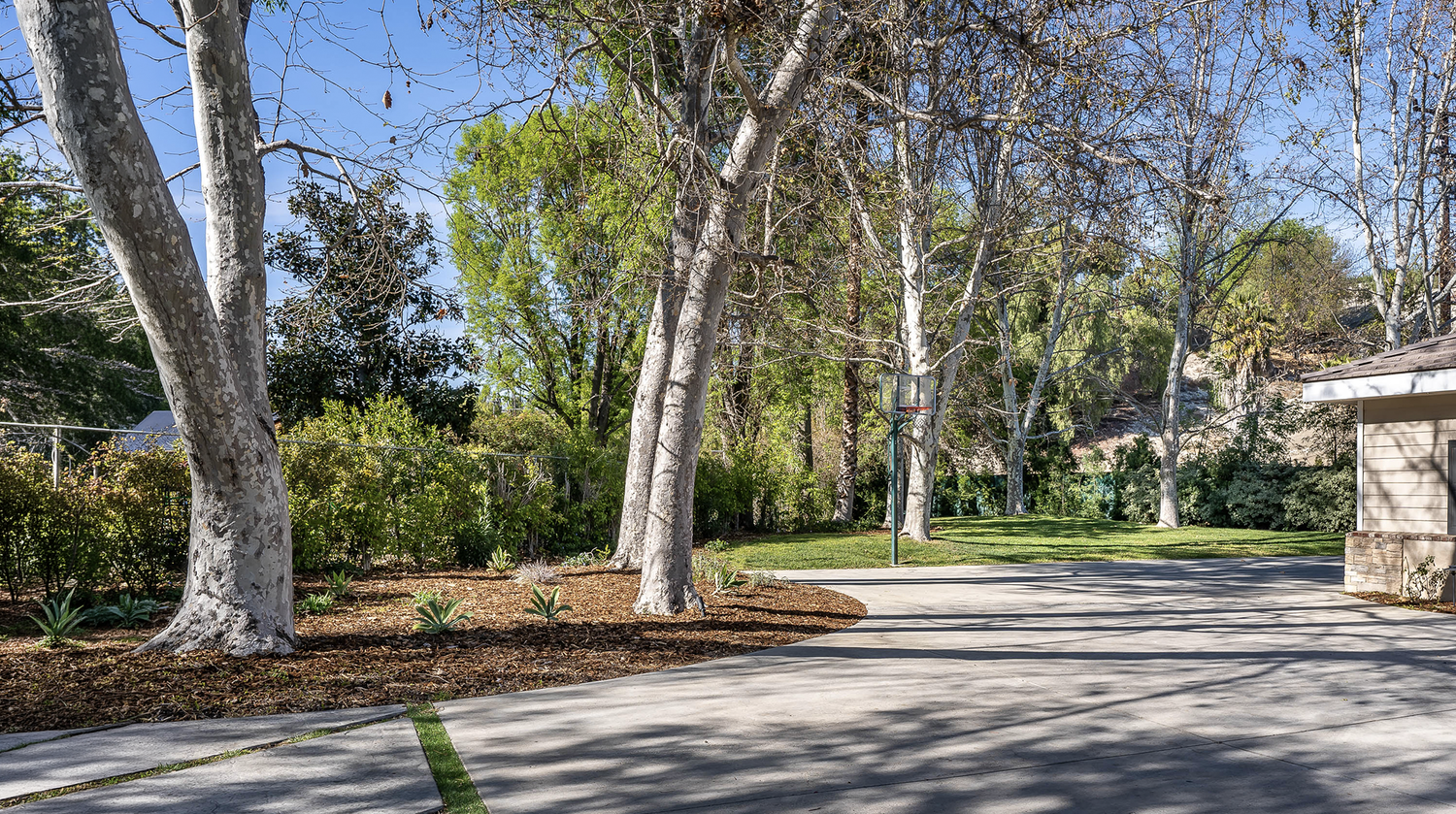
For many Hidden Hills owners, discretion isn’t a preference — it’s a requirement. And this is where we push back on a common misconception: privacy marketing isn’t less marketing. It’s marketing where you control the funnel.
The wrong approach is subtraction — no photos, no address, no sign, and hope. The right approach replaces broad exposure with precise exposure. We still produce full photography, video, and media; we just publish it selectively. We’re not hiding the house. We’re choosing who finds it.
On the buyer side, the funnel is enforced, not implied. Proof of funds or a lender letter demonstrating capacity at the price point, verified before anything is shared. Identity verification. NDAs signed by both the buyer and their agent before they receive the full address and full media. Showings by appointment only — no broker caravans, no open houses.
In place of publicity, the strategy is direct outreach: to specific qualified buyers we know are active, to the agents who work with them, and through the private networks where these transactions actually happen.
Done properly, a privacy sale doesn’t mean accepting a worse outcome. It means running a tighter, quieter process with the same competitive discipline.
IMPROTA INSIGHT
“We’re not hiding the house. We’re choosing who finds it.”
— Jason Improta
Why Don’t Average Days on Market Apply in Hidden Hills?
Sellers always ask about average days on market. In Hidden Hills, that number is close to meaningless — and we think it’s important to set it aside entirely.
Homes here sell in two modes. Fast: priced properly, prepped, correctly marketed, finding their buyer in the first 30 to 60 days. Or long: a listing that missed its window and is now waiting for an outlier buyer — six months, a year, sometimes more. The average of those two modes describes neither of them.
Here’s the math that matters instead: the first two weeks are a disproportionate share of the outcome — arguably a third of it. The pool of buyers actively looking in your price band at any given moment is small and knowable, and your launch is your one chance to reach all of them at once. Every week after launch, you’re no longer marketing to that pool. You’re waiting for new entrants — the relocation, the company sale, the divorce settlement. Those buyers arrive on their own schedule.
That’s also why seasonality matters less here than sellers think. A Hidden Hills buyer isn’t timing the school year the way a $2 million Calabasas buyer is; wealth events drive purchases year-round. That said, we do see stronger launch windows — late January through May, and the stretch between Labor Day and mid-November. The quiet zones are August and Thanksgiving through New Year’s, when residents are traveling or with family.
The takeaway: don’t ask how long the average home takes. Ask whether your price, preparation, and launch are built to win the first two weeks.
How Should You Evaluate Offers Beyond Price?
Our job at the offer stage is figuring out which promises will actually turn into a closed sale and a wire transfer. The highest number isn’t always the best offer — and the gap between the best price and the best offer can be hundreds of thousands of dollars.
Can they actually pay? Not just proof of funds, but what kind of proof. A bank letter or a screenshot? Cash, or stocks that need to move? The quality of the evidence matters as much as the number on it.
What are the escape hatches? Every contingency is one. How long does the buyer have to walk away for free? A big deposit with long contingencies is actually weaker than a normal deposit with short ones — the deposit only means something once the contingencies fall away.
Who is the buyer? Whenever possible, we want to know why they want this house, what their timeline is, and what else they’ve written offers on. Motivation predicts performance.
What about entities? LLC and trust buyers are completely normal in this market. Vague ones are not. We want to know who’s authorized to sign, proof the entity actually exists, and where the money is coming from.
Then we put every offer side by side in a grid and answer the only question that matters: which one is most likely to close — at the best combination of price, terms, and certainty?
What Complicates a Hidden Hills Sale, and How Do You Get Ahead of It?

Hidden Hills complicates sales in five specific ways, and every one of them is solvable before the listing — or expensive during escrow.
One: trail easements. The bridle trails are a defining element of the community, and they cross private properties. Know exactly what your easements are before a buyer’s title review finds them for you.
Two: two sets of approvals that may not match. Hidden Hills is its own incorporated city with building and safety, and every property also sits under the Hidden Hills Community Association. Overlapping but not identical roles, separate records, separate approval histories. Reconciling them before listing prevents the worst kind of escrow surprise.
Three: septic. Many of these large homes are decades old and on septic systems. A pre-inspection here is cheap insurance.
Four: old grading. Decades of grading history means some pads were permitted and engineered — and some were done by a guy with a tractor in the late ’80s. Given that flat, usable land is exactly what buyers pay premiums for, documentation of what’s under the lawn matters.
Five: insurance. Brush clearance, defensible space, and insurability increasingly shape both buyer confidence and carrying cost.
Sellers who resolve these five before launch control the narrative. Sellers who don’t end up negotiating all five at once, mid-escrow, from a position of weakness.
What Is Our Best Advice for Hidden Hills Sellers?
After everything above, our advice reduces to four ideas.
Price off what traded, not what’s sitting — and not off the trophy sale down the street. Decide your timeline honestly, because in this market you choose your wait, not your price. Spend preparation money removing doubt, not adding features. And make the off-market question an intentional choice, not a default.
Selling here rewards sellers who treat the launch like the main event — because it is. The right price, a prepared property, and a controlled process do more for your net than any amount of waiting ever will.
Every Hidden Hills sale we’ve closed, from $3.3 million to $4.7 million, is listed on our sales record, taken directly from MLS data.
If you’re thinking about selling — this year, next year, or you simply want to know what your property is really worth in today’s market — we’d welcome the conversation. We’ll give you the honest version: what traded, what sat, and where your home actually stands. Contact The Improta Team to start the conversation.
Hidden Hills Seller FAQs
How do I price a Hidden Hills home when there are so few comps?
Separate what traded from what sat — asking prices on stale listings tell you almost nothing. Then triangulate: price per acre plus replacement cost of improvements, and comparisons across similar markets like the Oaks of Calabasas, Bell Canyon, and sometimes Malibu. The handful of homes that actually sold show where the money is really moving.
Should I sell my Hidden Hills home off-market?
Off-market usually benefits the buyer more than the seller’s net — exposure is what creates competitive tension. But privacy has real value for some owners, and properties that show poorly can do better in a quiet process. The MLS is the default for maximizing net proceeds; off-market is a legitimate, intentional choice for specific situations.
What do Hidden Hills buyers pay premiums for?
Flat, usable land — especially the back of the lot; truly turnkey homes finished to current standards; quiet streets and strong positioning; privacy within the community, like mature hedging and gated motor courts; functional guest houses and ADUs; and the infrastructure tied to insurability, from brush clearance to generator capacity.
How long does it take to sell a home in Hidden Hills?
Average days on market is close to meaningless here. Homes sell in two modes: properly priced and prepared listings typically find their buyer in the first 30 to 60 days, while mispriced listings can wait six months to a year or more for an outlier buyer. The first two weeks of a launch are a disproportionate share of the outcome.
What complicates a Hidden Hills sale?
Five things: equestrian trail easements; two sets of approval records (the city and the Hidden Hills Community Association) that may not match; septic systems on older homes; decades-old grading that may or may not be documented; and insurance. All five are solvable before listing — and expensive to discover mid-escrow.